
1 de abril de 2026 · 6 min read
Understanding Container Modifications for Enhanced Value
Por Rio Verde Containers
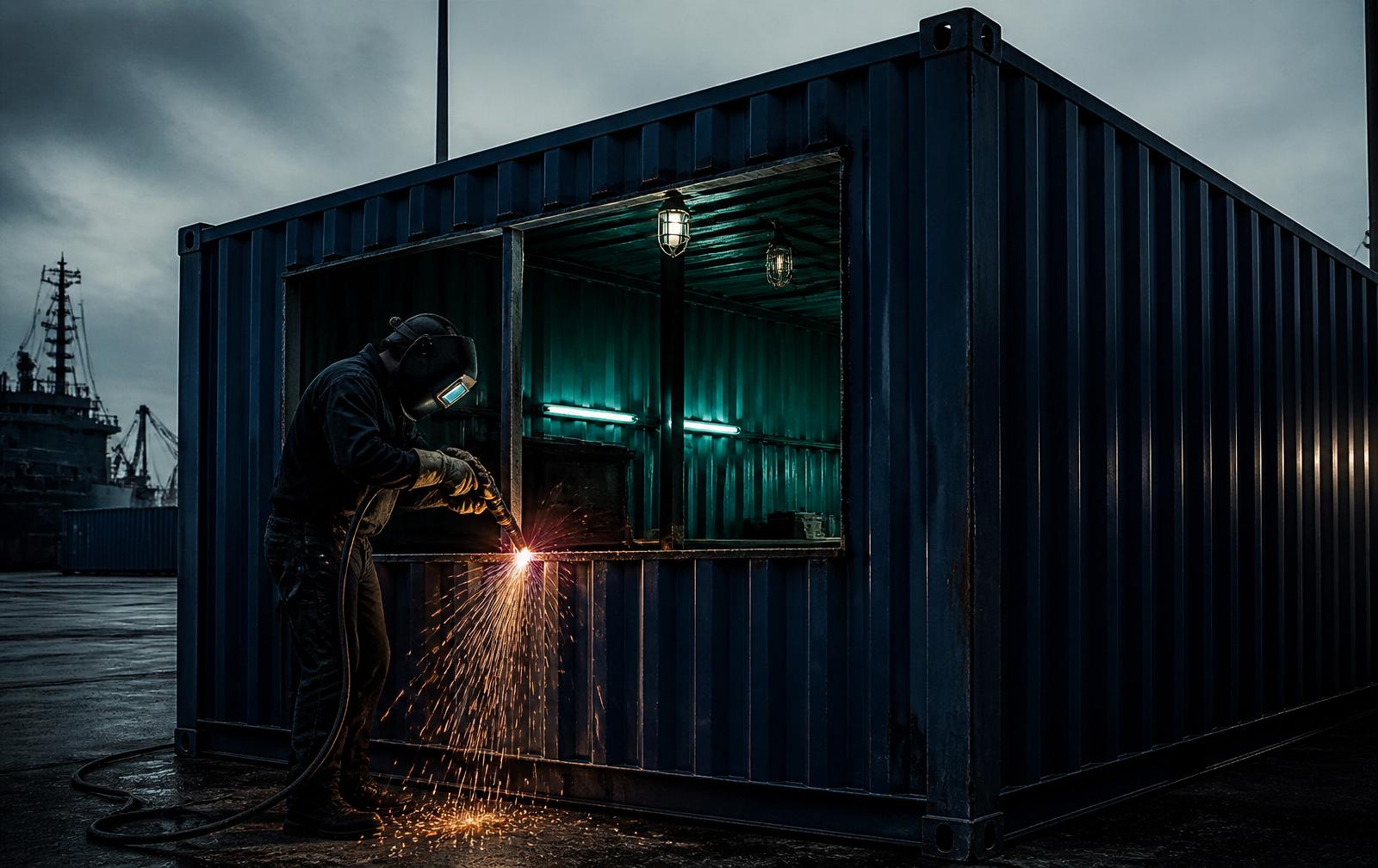
A shipping container is a structural asset long before it is a box. Understanding how modifications work — and where they add or destroy value — is what separates a smart purchase from an expensive one.
In logistics, the word container usually conjures a stack of corrugated steel boxes riding the deck of a feeder vessel. That image is accurate and incomplete. The same CSC-plated unit that carries cargo across an ocean is also one of the cheapest, strongest, most transportable structural shells available anywhere in the world — and the modification market has grown up around exactly that fact.
Modification is where a container stops being freight equipment and becomes infrastructure. Done well, it turns a depreciating asset into a revenue-earning one. Done badly, it destroys the structural integrity that made the box worth buying in the first place. The difference is almost always decided before a single cut is made.
Start with the right base unit
Every modification project inherits the condition of the shell it starts from. A One Trip unit gives you clean, unpatched steel and a factory paint system, which matters enormously if the finished unit will be seen by customers or occupied by people. Cargo Worthy is the pragmatic middle ground for utilitarian conversions. Wind and Water Tight is viable for storage and simple site conversions where cosmetics are irrelevant. As-Is should never be the base for a habitable conversion.
- One Trip — showrooms, offices, cafés, anything customer-facing or insulated
- Cargo Worthy — workshops, plant rooms, secure site storage with doors and vents
- Wind & Water Tight — static storage, agricultural and yard use
- High Cube variants — mandatory whenever insulation, ceilings or services are involved
That last point is the one buyers most often get wrong. A standard 20 ft container has 2.39 m of internal height. Add a 100 mm insulated ceiling raft, a raised floor and a lighting plane, and a tall person is ducking. High cube units buy you 300 mm of headroom for a marginal price difference, and that margin disappears entirely against the cost of retrofitting.
The modifications that add real value
Not all conversions are created equal. Broadly, the market rewards modifications that increase the number of buyers who can use a unit, and penalises modifications that narrow it to a single tenant or site.
- Personnel doors, roll-up doors and window openings — near-universal demand, strong resale
- Insulation and internal lining — essential for occupied space, and climate-appropriate spec matters
- Electrical fit-out to local standard, with certification — value only survives if the paperwork does
- Ventilation, whirlybirds and louvres — cheap, and they prevent the condensation that ruins interiors
- Shelving, racking and mezzanines — high utility, low structural risk
- Multi-unit joins and removed side walls — the highest value uplift, and the highest engineering risk
Where value is destroyed
A container carries its load through the corner castings, corner posts and the corrugated side walls acting as shear panels. Cut a large opening into a side wall without reinstating a welded frame and you have removed the structure that lets the box be stacked, lifted or trucked. The unit may look fine standing still on level ground; it will fail the moment it is picked up by a spreader.
Every opening you cut has to be given its structure back in steel. Anything else is borrowing against the day the unit gets lifted.
The second common value destroyer is the loss of CSC plating. Once a container has been structurally modified, it can no longer travel as international freight unless it is re-approved. For a unit destined to be a permanent site office, that is irrelevant. For a unit you expect to sell or relocate internationally, it can wipe out a third of its residual value overnight.
Costing a conversion honestly
A realistic budget has four lines: the base unit, the steelwork, the fit-out, and the logistics. Buyers routinely model the first three and forget the fourth. Delivery, crane hire, foundation pads and site access frequently add more than the container itself cost, particularly in constrained urban locations.
The useful discipline is to price the finished unit against what it replaces — a portable cabin, a leased unit, a built structure — over the same period. Container conversions win that comparison consistently for spans of three years or more, and they win it decisively when the unit can be relocated and redeployed rather than demolished.
Talk to us before you cut
Rio Verde supplies base units across the full condition range and advises on the specification before the modification decision is locked in. The cheapest conversion is always the one that starts from the correct shell. Tell us what the finished unit has to do, and we will tell you which grade and size gets you there.
¿Necesita contenedores, no teoría?
Indíquenos el tamaño, el estado y el destino, y le responderemos con disponibilidad y precio.